
Thinking About a Solar Lease? What Washington Homeowners Should Know
Solar Leases in Washington: What Homeowners Need to Know Before Signing

Solar financing is changing, and Washington homeowners may increasingly encounter offers that promise a lower upfront cost through a prepaid solar lease or Energy Services Agreement (ESA).
At first glance, these programs can look very attractive. Instead of purchasing the solar system yourself, you make an upfront payment to use a system owned by another company. The system owner may also be able to take advantage of federal tax incentives that aren’t available directly to the homeowner, potentially allowing the company to offer a lower initial cost.
But there’s an important distinction to understand:
You’re not buying the solar system. You’re paying for the right to use someone else’s system—and you may still have an electric bill.
Before signing a long-term solar agreement, make sure you understand the full cost, who owns the equipment, what you’ll pay to eventually own it, and what happens if you sell your home.
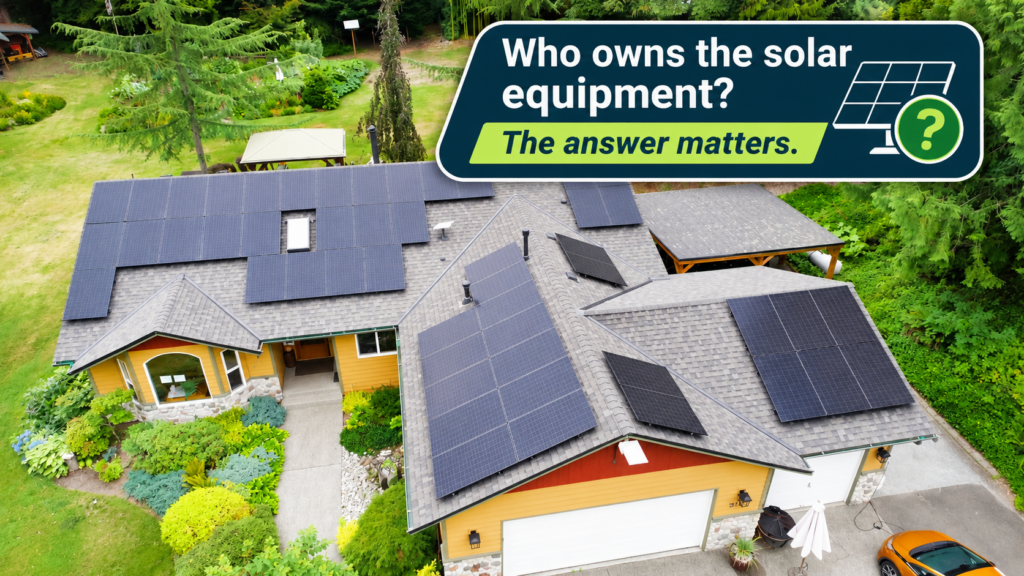
You’re paying for the solar system—but you don’t own it
With a traditional solar purchase, you buy the equipment and it becomes your property. With a lease or ESA, another company owns the solar panels, inverter, batteries and other equipment installed on your property.
You are essentially paying for the energy services the system provides.
That can have advantages. Depending on the agreement, the system owner may be responsible for maintenance, repairs and equipment performance.
But there’s an important tradeoff:
You don’t own the asset you’re paying for.
That’s a significant difference when comparing a lease or ESA with purchasing a system outright or financing a system that you own.
Your electric bill doesn’t necessarily go away
Solar doesn’t automatically mean a $0 electric bill. How much electricity your system offsets depends on how the system is sized and how much electricity your home uses.
If your home uses more electricity than the system produces, you still purchase the difference from your utility.
So with a leased or ESA system, you could have two separate costs:
- Your payment to the solar company
- Your utility bill for electricity your solar system doesn’t offset
For example, if your home uses 12,000 kWh in a year and the solar system offsets 9,000 kWh, you still need to purchase the remaining 3,000 kWh from your utility.
Look at the total cost—not just the upfront price
With a prepaid lease, it’s important to look beyond the initial payment and consider what you’ll pay over the entire agreement.
Solar lease/ESA payments + Utility electricity costs + Other charges = Your total energy cost
That’s the number to compare with the cost of purchasing and owning a solar system.
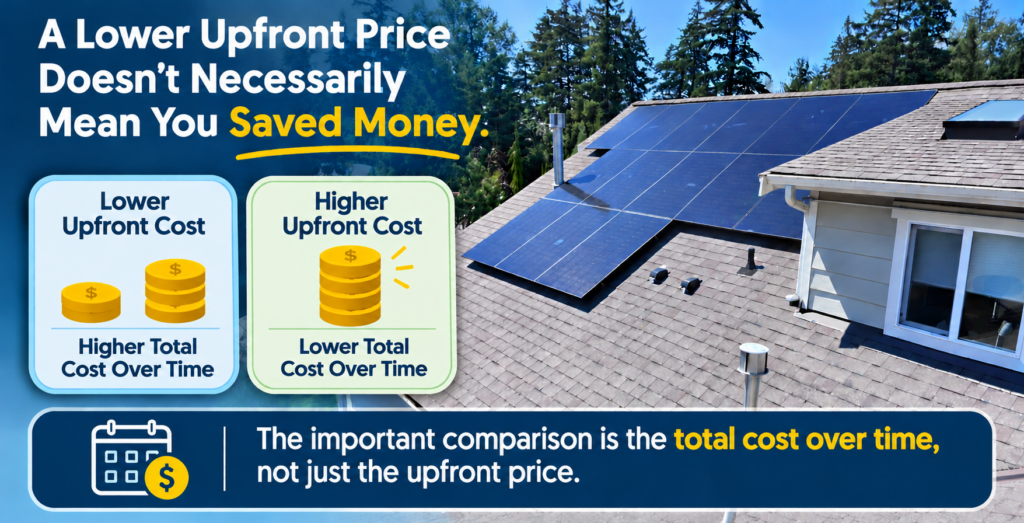
A lower upfront cost can be appealing, but it doesn’t necessarily mean the solar system will cost less overall. The third-party system owner may be able to claim federal tax incentives and pass some of that value along through a lower initial payment. But you’re also entering into a different ownership and payment arrangement: the company owns the equipment, and you’re paying to use it.
So the question isn’t just, “How much do I have to pay upfront?”
It’s: “How much will I actually pay over the entire agreement?”
A lower initial payment can look attractive while still resulting in a higher total cost over time.
The future buyout can be another major question
Some prepaid lease programs give you the option to purchase the solar system after several years.
This may sound appealing: pay upfront, use the system for several years, and then buy it.
But there’s an important catch.
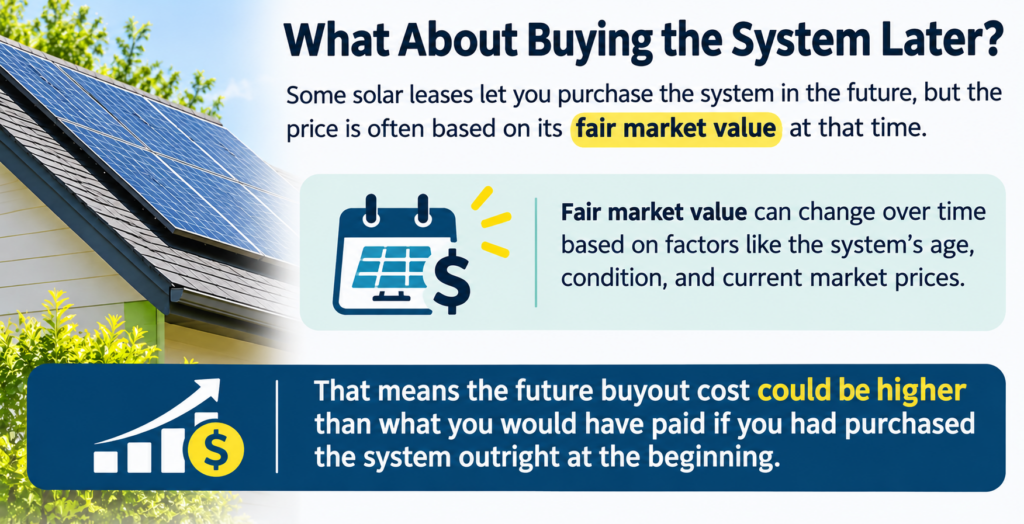
The future purchase price may be based on the system’s fair market value at that time rather than a purchase price established when you sign the agreement.
That creates uncertainty about what it will actually cost you to own the system.
A five-year-old solar system can still have substantial value. Solar panels are designed to produce electricity for decades, and other equipment such as batteries and inverters may also retain significant value depending on age and condition.
So don’t assume the system will be worth very little simply because you’ve already paid to use it.
You could potentially pay a substantial amount to use the system and then face another substantial payment to actually own it.
What exactly does “fair market value” mean?
If the contract says you can purchase the system later at fair market value, find out:
- Who determines the value?
- What factors are used to determine it?
- Is there a specific formula in the contract?
- Is the future purchase price capped?
- Can you challenge the valuation?
- Does your prepaid amount reduce the purchase price?
- What happens if you decide not to purchase the system?
The answer matters because you don’t know today’s price for something you’re agreeing to purchase in the future.
That’s very different from purchasing a solar system today at a known price.
What happens when you sell your home?
This is another issue to consider before entering a long-term lease or ESA.
If you own your solar system, it’s part of your property. With a leased system, the equipment belongs to another company, and your agreement with that company may continue even if you sell your home.
Depending on the contract, you may need to:
- Transfer the agreement to the buyer
- Have the buyer qualify to assume the agreement
- Purchase the system
- Pay an early termination or buyout amount
- Work with the solar provider to resolve the agreement before closing
Before signing, ask:
 What happens if I sell my home three years from now?
Then ask the same question for five, ten and fifteen years from now.
And keep in mind that a potential buyer may be hesitant to take on a solar lease if they know they could face a significant purchase expense later.
Questions to ask before signing a solar lease or ESA
Before signing a long-term solar agreement, ask the solar provider to answer these questions in writing:
- Who owns the solar equipment?
- How much will I pay upfront?
- How much will I pay in lease or ESA payments?
- How much electricity is the system expected to produce each year?
- How much electricity will I still need to purchase from my utility?
- What will my total energy cost be, including both solar payments and utility bills?
- How is the future purchase price determined?
- What does “fair market value” mean under this contract?
- Is the future buyout price guaranteed or capped?
- What happens if I sell my home in 3, 5, 10 or 15 years?
- What happens if the system doesn’t produce the amount of electricity projected?
- Who pays for equipment repairs or replacement?
- What happens at the end of the agreement?
And perhaps the most important question:
What would is the total cost of the same system if I simply purchased and owned it myself?
Get that number before deciding.
What About Financing a Solar System You Own?
If paying for a solar system upfront isn’t practical, financing can allow you to spread the cost over time while owning the system from the beginning.
A solar loan, home improvement loan, home equity loan or HELOC may be worth considering. Some solar loans may require little or no money down.
Financing does add interest and potentially other fees, so compare the total cost of the loan, not just the monthly payment or advertised interest rate.
But financing doesn’t necessarily make solar a poor investment. When comparing your options, consider:
- Upfront cost
- Monthly payment
- Interest rate and fees
- Total amount paid over the life of the loan
- Ownership of the system
- What happens if you sell your home before the loan is paid off
It’s also worth considering what your money could be doing elsewhere. If you have savings in a money market or another investment, putting some of that money into solar may provide a return through the energy it produces and the utility costs it helps avoid.
Solar can be a particularly attractive long-term investment in Washington as utility rates continue to rise. Even with financing costs, the long-term savings from producing your own electricity can make solar a strong investment for many homeowners.
The important thing is to look at the whole picture: the cost of the system, financing costs, expected energy production, utility rates and the long-term value of owning the system.
The bottom line for Washington homeowners
A solar lease or ESA can provide a way to install solar with less money upfront, and that may be valuable for some homeowners.
But a lower upfront payment doesn’t necessarily mean a lower total cost.
With a third-party-owned system, you’re entering into a long-term agreement to use equipment that belongs to someone else. You may make lease or ESA payments while continuing to receive an electric bill for power your solar system doesn’t offset. If you later want to own the equipment, the purchase price may be based on its future fair market value rather than a price you can determine today.
 Before signing, look beyond the advertised upfront savings or monthly payment. Compare the total cost, understand who owns the equipment, and make sure you know what it will take to own the system—or walk away from the agreement—later.
Solar is a significant investment. Make sure you understand exactly what you’re buying before you sign a long-term agreement.
Fire Mountain Solar – A Solar Company You Can Trust
Since 2001, Fire Mountain Solar has been committed to unwavering ethics, superior craftsmanship, and outstanding customer care, which helps us stand out among the best solar companies in our state. We genuinely value your business and will always go the extra mile to ensure your complete satisfaction with our products and services.