
Protect Yourself from Rapidly Rising Energy Costs and Demand by Going Solar
Rising Energy Costs and Demand Make Solar Investment the Wise Choice for Washingtonians
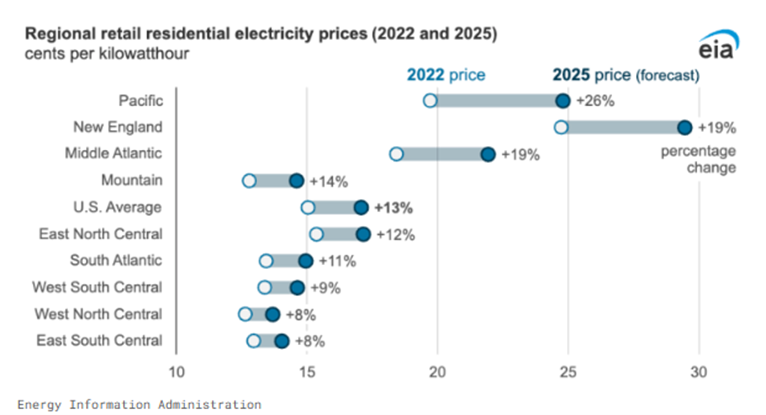
It is not news to anyone that prices are rising everywhere, including electricity costs. Across the country and close to home, utility providers are raising rates above historic averages and show no signs of slowing down anytime soon. Increased demand plays a big role in rising electricity rates. And in the next five years alone, US electricity demand is expected to increase an astonishing 15-16%. For context, for the last two decades, the annual increase in power demand has been less than 1%.
According to one Energy.gov write up:
“U.S. electricity demand is projected to account for data center expansion and the rise of artificial intelligence (AI) applications, domestic manufacturing growth, and electrification of different industries.”
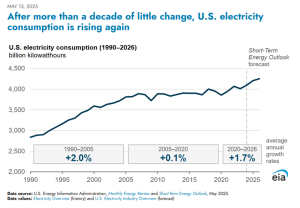
Following a prolonged period during which energy efficiency in American residential and commercial buildings improved, the United States is experiencing a rise in electricity consumption for the first time in more than a decade. This surge can be attributed to several factors, including the rapid and often mandatory shift towards electrification, the expansion of cloud computing, and growing energy demands from AI and data centers. Overall energy demand continues to escalate. Additionally, challenges such as inflation, aging infrastructure, and inadequate equipment, alongside regulatory requirements and business models that necessitate extensive application and documentation processes, are further complicating and delaying upgrade initiatives.
Washington State’s Clean Energy Transformation
Closer to home – Washington State has made progress in the significant reduction of fossil fuel usage. With legislation and building regulations heavily favoring electric-powered homes and businesses, the state is aiming to phase out natural gas and propane. Additionally, the state has increased the availability of green energy credits for buildings that adopt solar photovoltaic systems, highlighting its dedication to both electrification and diversifying the energy grid. There are also established benchmarks for all electric utilities to transition away from non-renewable energy sources.
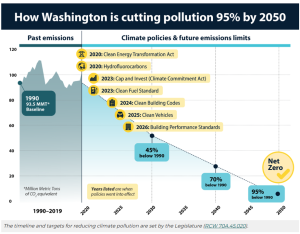
The demands of prioritizing widespread electrification, along with increasing costs of natural gas and propane, have left Washington consumers responsible for the ongoing rise in energy expenses from conventional sources.
In June, the electricity segment of the Consumer Price Index saw an increase of 5.8% compared to the same month last year. This marks the third consecutive month that electricity prices have exceeded the overall inflation rate, indicating a trend that is accelerating, with the rise now exceeding twice the CPI’s 2.7%. Source
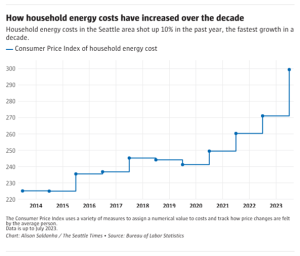
Washington has traditionally enjoyed the advantages of low-cost electricity, largely due to its hydroelectric dams. However, as demand continues to grow rapidly, utilities are raising rates to compensate for increased generation, transportation, and maintenance of the grid. With these rising expenses being transferred to consumers, many homeowners are looking for ways to gain greater control over their energy costs
You Have a Choice – Your Power, Your Way
However, there is some positive news. Homeowners have the opportunity to stabilize their energy expenses by investing in a solar system that offers a guaranteed return on investment. A residential power system can not only generate electricity but can also be integrated with various backup solutions to supply additional power during outages. There are growing worries about grid stability across significant regions of the country. Given the rise in unpredictable and extreme weather conditions, it is increasingly sensible for many individuals to have a backup system in place to ensure power availability during outages or potential shortages.
As utilities increasingly focus on maintaining grid stability, various pricing models are being adopted to deter excessive energy use. This trend is particularly evident in residential regions, where utilities often implement tiered pricing, time-based rates, and/or charges for peak demand. A local example of this is PSE’s Flex Events, which promote more mindful energy usage and introduce a competitive aspect, encouraging neighbors to “out save” one another. Homeowners and businesses alike will need to make choices on how to manage the impact of escalating electricity costs on their finances.
Savvy home and business owners are already planning ahead and looking at ways to take control of their power needs with a customized solar or solar & battery system.
Just as a mortgage enables you to fix your housing expenses based on the home’s purchase price (along with the interest rate on the mortgage), investing in a solar system provides an opportunity to limit your future electricity costs. However, unlike mortgage interest rates, which can decline, utility companies historically do not reduce their rates.
As reported by PowerLines, a nonprofit organization dedicated to lowering electricity costs, approximately 80 million Americans are forced to compromise on essential expenses such as food and medicine in order to pay their utility bills. The situation is expected to deteriorate further, as utility companies across the nation have requested regulators to approve nearly $29 billion in electricity rate hikes for consumers during the first half of the year. Vox
In a rapidly changing market, it is easy to feel like you’ve “missed out” on the best deal – fortunately solar remains an excellent, guaranteed investment for homeowners in Washington State.