
Record Increases in PSE Rates Make Solar Investment Smarter Than Ever
Why your PSE bill has jumped, and will just keep rising.
For the average Puget Sound Energy (PSE) customer, affordable electricity is now a thing of the past. Here’s what’s going on.
Following a prolonged period during which energy efficiency in residential and commercial buildings improved, Washington (and the entire U.S.) is now experiencing a rapid rise in electricity consumption. Growing demand stems from things like more people using electric cars and the installation of air conditioning systems to combat increasingly warmer summers, as well as enhanced green energy credits for new construction projects. On a larger scale, rising energy use is also linked to the growth of cloud computing and heavy power needs of AI technologies and data centers.
Washington’s Clean Energy Transformation Act (CETA) Moves Utilities Away from Traditional Energy Sources
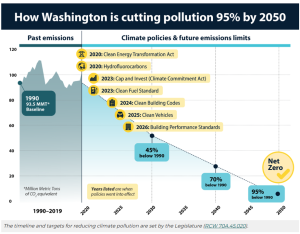 At the same time overall energy demand continues to escalate, CETA is requiring utilities to transition away from fossil fuel sources of power generation. CETA applies to all electric utilities in Washington, requiring them to get 100% of their power from renewable or zero-carbon resources by 2045. And while historically Washington has relied heavily on clean hydroelectric power, building new dams is no longer feasible.
Consequently, these new regulations force utilities to develop new ways of producing power to supply their customers. Complicating things even more are regulatory requirements that have extensive application and documentation processes which delay upgrade and construction projects.
Who Pays for All of This? You Do!
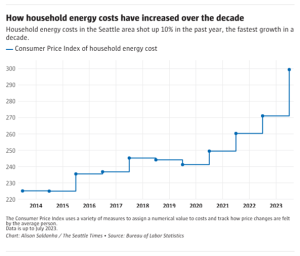
All of these combined pressures are forcing utilities to increase their rates to their customers to offset the costs associated with expanded generation, power transmission, and essential upgrades to aging infrastructure required to meet growing demand.
Nationally, in June 2025 the electricity segment of the Consumer Price Index (CPI) saw an increase of 5.8% compared to the same month last year. This marks the third consecutive month that electricity prices have exceeded the overall inflation rate, indicating a trend that is accelerating, with the rise now exceeding twice the CPI’s 2.7%. Source
PSE Electricity Rate Increases – Already Approved & Coming Soon
Back at home, PSE customers saw a total rate increase of 21.3% in 2025, with an additional increase of 13.1% in January 2026. Over the last 10 years, PSE’s rates have shown an average annual increase of 6%.
Source: PSE.com
PSE Rate History Data Updated January 2026
Industry experts predict this upward trajectory will not only persist but accelerate over the next 20 years as PSE works to meet CETA compliance requirements and address growing consumer demand. Evidence that PSE plans additional rate increases came in January 2026, when they filed a “Notice of Intent to File a General Rate Case” with the Utility and Trade Commission.
You Have a Choice – Your Power, Your Way
But there is still positive news! You can take control of your energy costs by investing in solar which offers a guaranteed return on what you spend upfront. Most systems will have paid for themselves within 12-14 years – and that’s before further rate increases. The primary solar system components typically carry 25-30 year warranties and are engineered for even longer service life, meaning these systems can significantly reduce living expenses for decades after they’re paid off. Since saving money on living expenses becomes even more important after retirement when most people are on a fixed income, going solar now sets you up for long term financial benefits.
But Wait, There’s More!
Savings on energy bills are not the only benefit of going solar.
Studies consistently show increased sale prices and fewer days on market for homes with solar. One, by the National Renewable Energy Laboratory, under the U.S. Department of Energy, shows homes with solar panels can see up to a $4 increase in value for every watt installed. A 2025 report from SolarReviews.com based on Zillow data, found that homes with solar panels sold for about 6.9% more than those without between 2022 and 2025. Even taking a more conservative estimate of a $2 per watt increase in property value, solar still stands out as a good financial choice. The implications are clear: installing solar panels offers many homeowners solid returns even if they sell their homes before recouping the upfront costs through energy savings.
The Best Time to Go Solar is Always Now!
In a rapidly changing economy you might worry you’ve missed out on the best deal. But solar still stands as a solid and reliable investment to make for homeowners in Washington State.
So, what are you waiting for? Stop “renting” your electricity from your utility company, and start putting that savings back into your own pocket.